Oana Coșman
Romania stood out with the largest participation in the EUDIS hackathon, with 130 participants and 24 projects presented, followed by Germany (119 participants and 16 projects proposed) and the Netherlands and Portugal (110 participants and 13 and 14 projects registered, respectively).
The winning teams from each country will present their projects in January 2026 to representatives of the European Union member states. The three projects selected as winners at European level will then be invited to a prestigious international event, where they will showcase their innovative solutions.
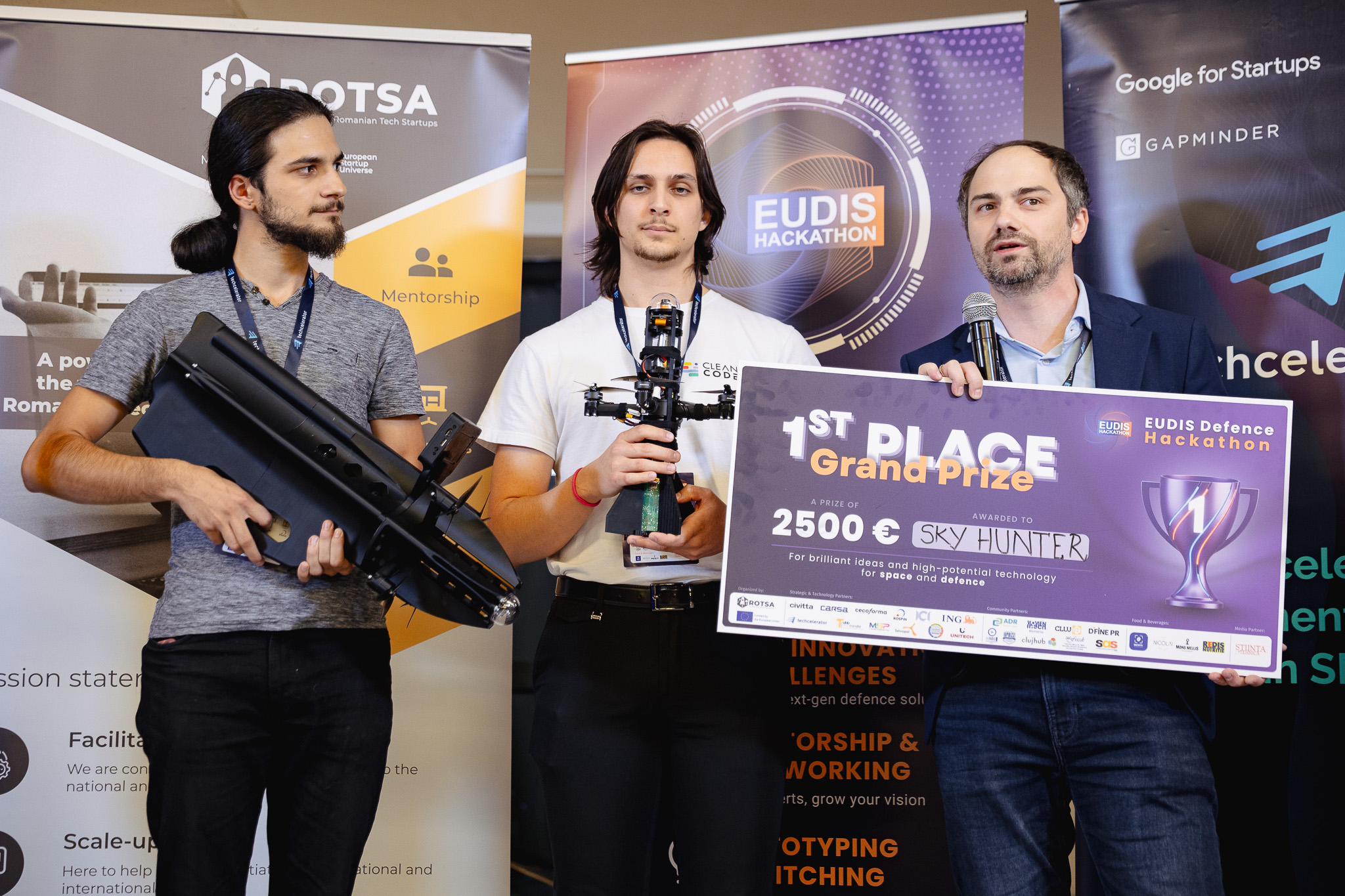
The Romanian jury awarded prizes to four teams: SkyHunter (first place), AeroCipher (second place), ApexNAV and BraveX (third place).
The SkyHunter team has developed an autonomous interceptor, made using 3D printing, designed to protect airspace by continuously monitoring the surroundings to detect enemy drones, which it can automatically neutralize. Each system consists of compact modules that can be installed on roofs or in open areas and remains inactive until activated by integrated visual and acoustic sensors. The team members are: Adrian Rotaru, Eduard-Gabriel Manolescu, Horia Mitrica, Vlad Erham.
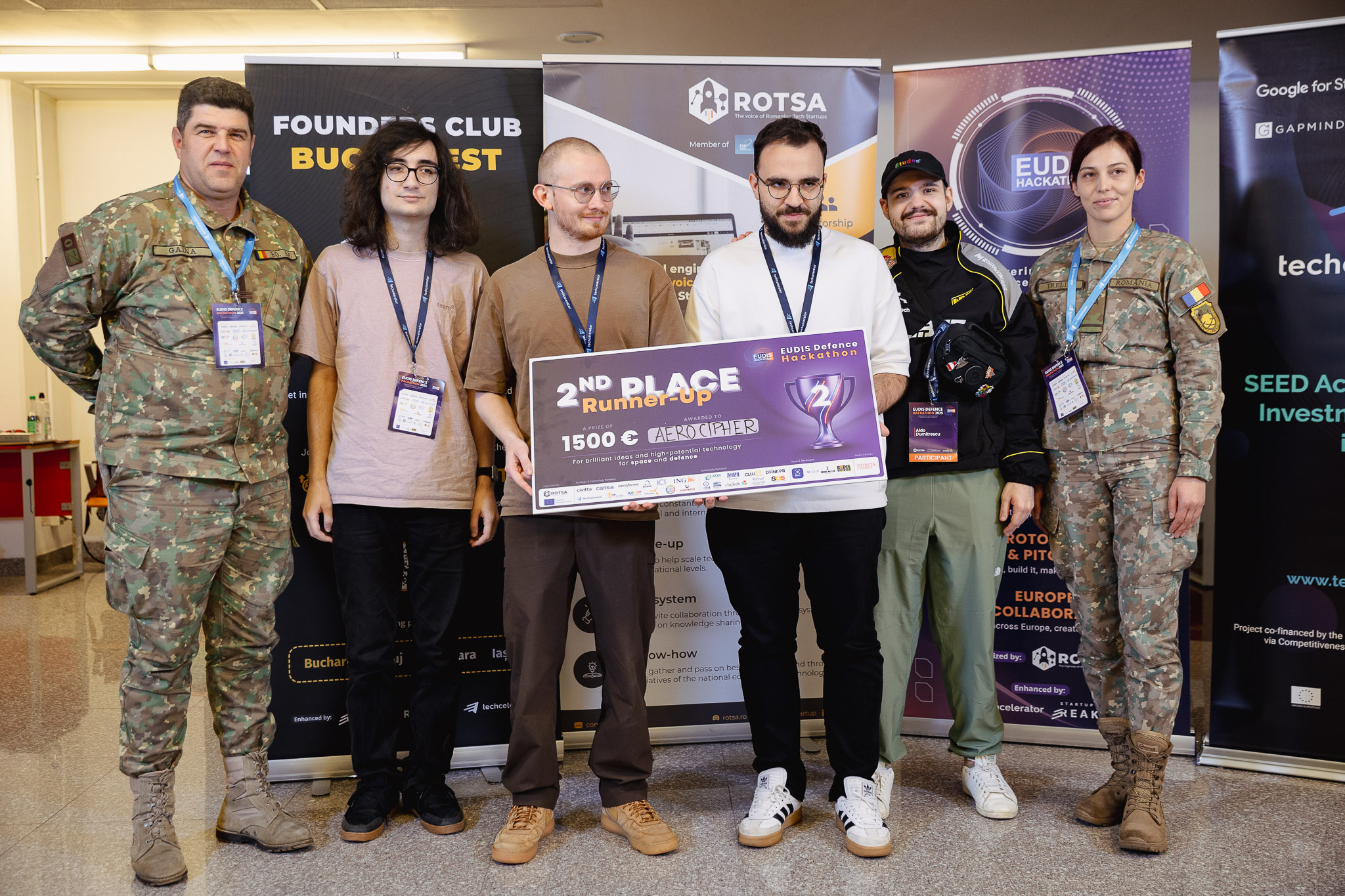
The AeroCipher team proposed a system that detects and decodes acoustic signals, which can be used to identify enemy autonomous systems and transmit coded messages. The team members are: Radu Cioaca, Alexandru Hantascu, Bogdan-Mihai Mosteanu, and Aldo Dumitrescu.
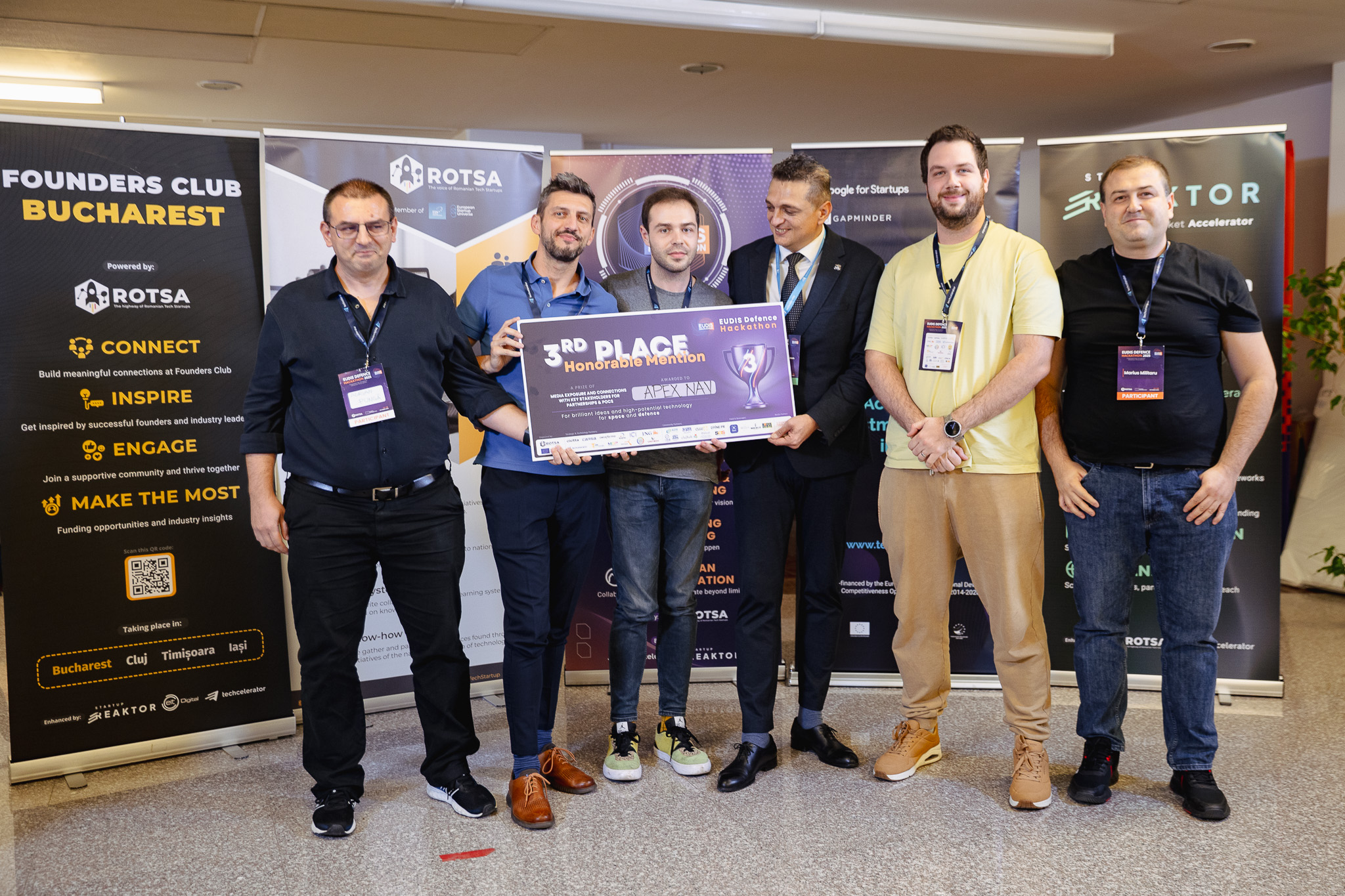
The ApexNAV team proposed a system that works as an alternative to GPS in areas affected by electronic warfare, while BraveX proposed a hybrid drone capable of performing border surveillance and emergency response missions.
The members of the ApexNAV team are: David Iftime, Adrian Punga, Vladimir Iacob, Marius Militaru, Matei Nenciu, and the members of BraveX: Mircea Vădan, Răzvan Costea-Bărluțiu, Antonio Florin Iordache, Andreea Tănase.
The first prize is worth €2,500, and the second prize is worth €1,500. The SkyHunter team will benefit from two months of intensive mentoring, consisting of approximately 40 hours of consulting provided by experts. The other winning teams will have access to an extended mentoring program for up to six months, with services provided at an estimated value of at least €16,000.
The jury evaluating the projects included: Constantin Alexie Cotan Bodolan, Chairman of the Board of Directors of CN ROMARM SA; Horia-Răzvan Botiș, Romania's representative on the Board of Directors of NATO's military technology accelerator DIANA; Viorel Băltărețu, Secretary of State, Ministry of Economy, Digitalization, Entrepreneurship, and Tourism; Bogdan Iordache, partner at Underline Ventures; Ulpia Elena Botezatu, member of the United Nations Office for Outer Space Affairs; Răzvan Rughiniș, professor at the Polytechnic University of Bucharest; Alina-Mihaela Bădescu, professor at the Polytechnic University and researcher at the Romanian Space Agency (ROSA).

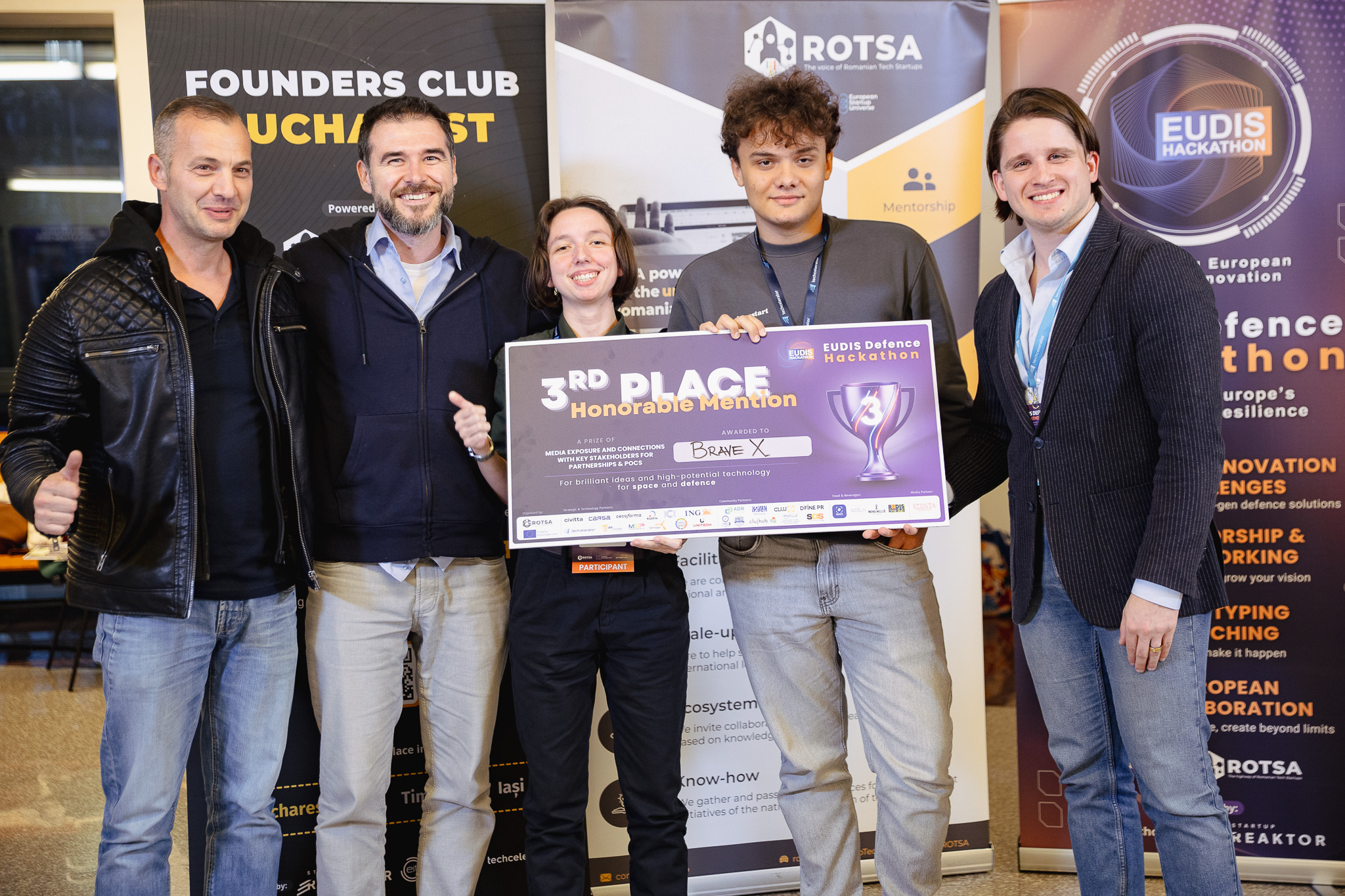
This was the first hackathon in the country dedicated to dual-use solutions and was organized in Romania by the Romanian Tech Startups Association (ROTSA) and hosted by the Polytechnic University of Bucharest - "Precis" Center.
In the context of European efforts to strengthen defense capabilities, the EUDIS hackathon is a continuation of initiatives carried out by ROTSA, in partnership with Techcelerator, in the field of digital innovation for defense and the space sector, since 2016.
These efforts include supporting projects such as DIANA—NATO's accelerator for civil and military solutions—and NASA Space Apps Challenge, the world's largest hackathon.
Thus, Techcelerator and ROTSA have developed activities dedicated to scaling Romanian companies that develop solutions for space and defense.
The consortium formed by ROTSA and Techcelerator was selected to implement EUDIS activities in Romania, in a European competition, alongside a community of local agencies in the field of defense and security.