Oana Coșman
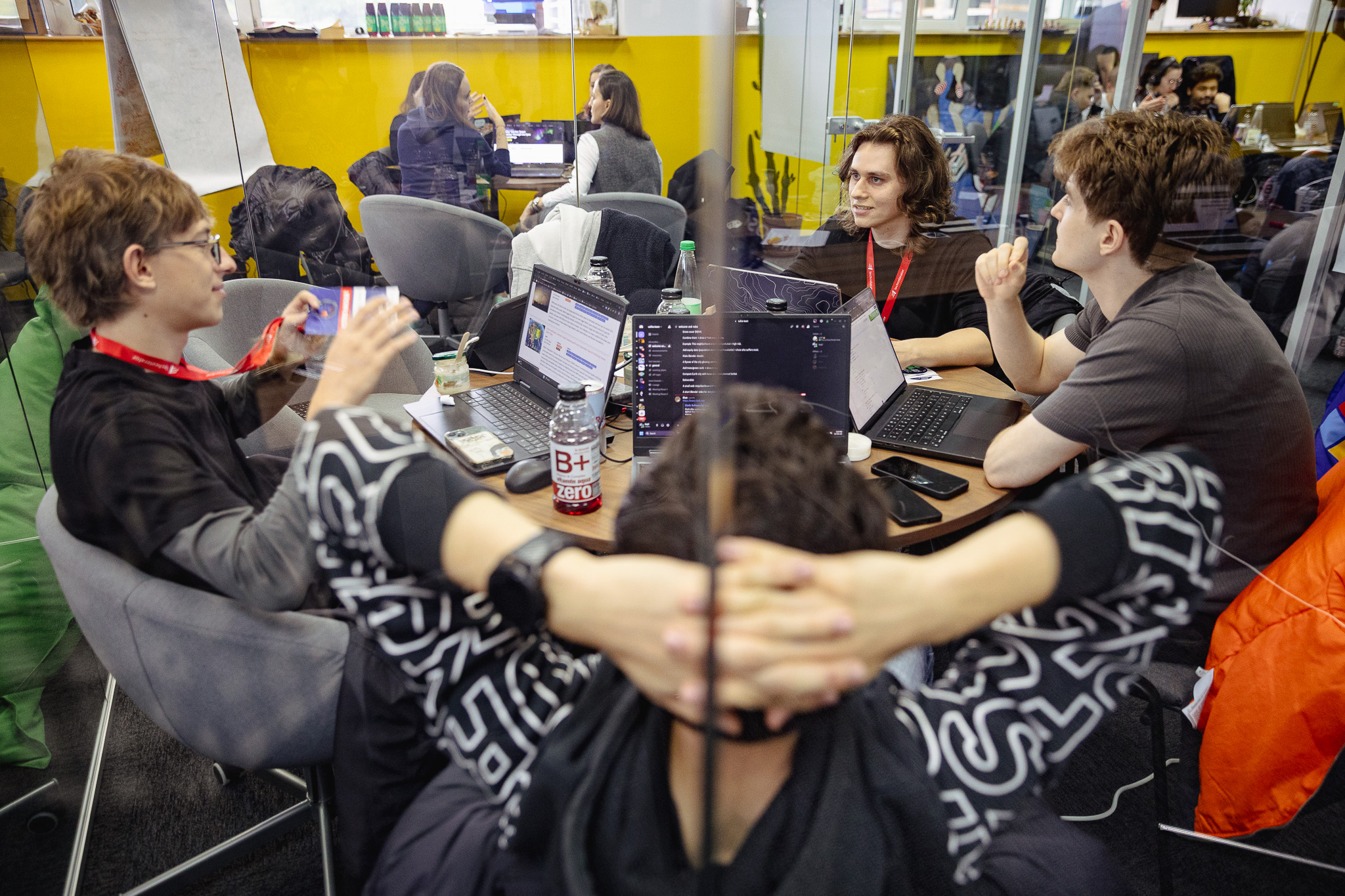
Two teams from Bucharest and one from Cluj-Napoca are moving forward in the global NASA Space Apps Challenge competition, following the largest global hackathon, which took place over the weekend in the two Romanian cities, plus nearly 400 others around the world.
The AiRo and Paradis teams from Bucharest will advance to the global stage of the NASA Space Apps Challenge. They developed an algorithm for businesses that can assess the impact of business decisions on the environment and a visual learning platform for phenomena in physics and astrophysics.
The winning team from Cluj-Napoca is Particle Warriors, which developed AirSignal, an AI-based ambient intelligence platform that transforms air quality monitoring into real-time actionable information.
NASA Space Apps Challenge: the Romanian teams going to the global editition
The jury in Bucharest awarded three teams: AiRo, Paradis, and Exo Explorer. International rules allow two teams to advance to the global stage, given the total number of projects entered in the local competition.
The AiRo team developed an algorithm for businesses that can assess the environmental impact of business decisions. The members of the AiRo team are: Mihai-Ovidiu Burea, Mihai-Carol Bâzgă, Gabriel-Cosmin Bilciurescu, Mihai Pasaroiu, and Andrei Gabriel Mitran.
The Paradis team proposed a visual learning platform for phenomena in the field of physics and astrophysics, which translates technical elements into visual and easy-to-understand language. The platform is dedicated to students, but also to the general public. The members of the Paradis team, who came from Iași to participate in the hackathon in Bucharest, are: Dragoș Andrei Bobu, Mihai Jarda, Radu Tudor Androne, Loredana Sava, and Alexandra Maftei.
The team ranked third, Exo Explorer, created a navigable and visual database for cataloging exoplanets and details about them. The team members are: Codruț Eduard Bicu, Mihai Stamatescu, Mihnea Munteanu, Tania Lorena Vînturiș, Mihnea Ștefan Stamatie, and Mihnea Zamfir.
The judges who selected the teams included Aleodor Tabarcea, engineering manager at Stripe; Tiberius Beganu, principal group software engineering manager at Microsoft; Octavian Thor Pleter, professor of aerospace engineering at the Polytechnic University; Diana Nițescu, cyber policy consultant and founder of OctogonHUB; Lucian Popovici , engineering director at Cegeka Romania, Vlad Koblicica and Adrian Țurțulea from ROSPIN, and Ada Roseti, trainer and researcher in science and technology communication.
In evaluating the projects, the judges took into account technical accuracy and complexity (well-founded ideas and solid solutions), real-world applicability (the ability of projects to be used or developed immediately), team cohesion, and clarity of presentations (how well they worked together and presented their projects).
Particle Warriors from Cluj, participants in the global competition
In Cluj-Napoca, the jury selected a team to advance to the global stage. This is Particle Warriors, which developed AirSignal, an AI-based environmental intelligence platform that transforms air quality monitoring into useful information that can be applied in real time.
By combining satellite data, ground sensors, and information about local activities (traffic, industry, weather, natural phenomena), AirSignal's artificial intelligence engine correlates pollution anomalies with probable sources, whether human or natural.
The app helps governments and organizations understand, prevent, and report exceedances of limit values, accelerating progress toward the EU's zero pollution goals. The members of the Particle Warriors team are: Ovidiu-Adrian Drăgan, Aaron de Miranda Colaço, Claudiu Constantin Bogdan, Ionuț Hodina, and Filip Csibi.
At the opening of the Bucharest edition, cosmonaut Dumitru Prunariu inspired participants with real stories from his space expedition and encouraged them to follow their dreams, no matter how impossible they may seem at first.
“Now more than ever, this is a time full of opportunities for international collaboration between all continents and space agencies around the world. There has never been a better time for those of you who want a career in this field. Search, ask, propose, discover - Romanians have enormous potential,” said Dumitru Prunariu, the first and only Romanian cosmonaut to have been in space.
The three winning projects will be sent on to the global stage, where NASA specialists will choose the winners from thousands of projects. In the global stage, 10 prizes are offered for: best use of science, best use of data, best use of technology, galactic impact, best mission concept, most inspiring project, best story, global connection, art and technology, local impact.
Global winners will have the opportunity to visit a NASA center or facility, where they will be awarded and discover the latest scientific achievements directly from agency leaders.
The mission of the NASA Space Apps Challenge is to stimulate collaboration, creativity, and critical thinking, encourage interest in Earth and space exploration, raise global awareness of NASA data, and develop the next generation of scientists, engineers, technologists, and designers.